


David Lashar
Libertarian Party

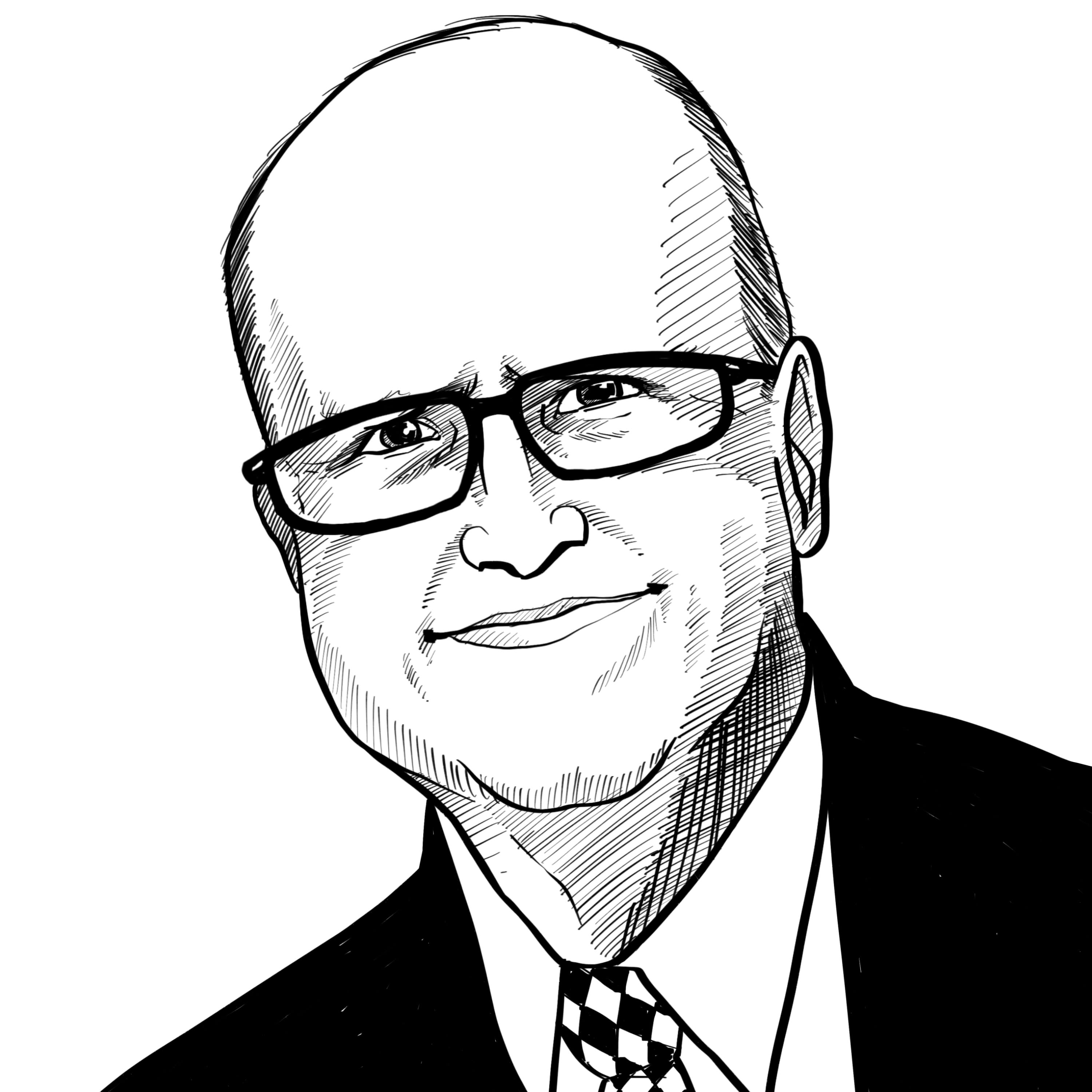
(John Baker for The Baltimore Banner)
(John Baker for The Baltimore Banner)
- Age: 59
- Resides: Annapolis
- Experience: Information technology specialist and former state government official. Bachelor’s degree in Soviet studies, Dartmouth College. Master’s in business administration, Carnegie Mellon University. Former Capitol Hill staffer and information technology executive in the private sector. Worked for the Maryland Department of Health under Gov. Larry Hogan, including roles as chief information officer and chief operating officer, 2016-2018. Unsuccessful campaign for U.S. Congress in 2018.
- Personal: Married with one child.
- Candidate Website
- Read The Baltimore Banner’s profile of David Lashar
- Listen to David Lashar on "Midday with Tom Hall" on WYPR Radio
Running mate:
Christiana Logansmith
- Age: 57
- Resides: Annapolis
- Experience: Co-owner of a commercial cleaning service franchise. Bachelor’s degree in computer science, Harvard University. Four years of service in the U.S. Navy.
- Personal: Married with one child.
Questionnaire:
Jump to key issues:
Both the state government and local governments are required to make significant investments in public education under the Blueprint for Maryland’s Future. (Also known as the Kirwan plan.) How would you ensure that these financial commitments are met?
Why is it assumed that if we pour vastly more money into the current public-monopoly system, which system has been delivering results that are unacceptable across the state and unconscionable within Baltimore City, we will suddenly get outstanding results? Myself, I don't believe that lack of money is the problem with education in Maryland. What IS the problem, then? Lack of ACCOUNTABILTY amongst those running the public schools. How do we obtain accountability? By introducing competition and choice within a public-private mix of K-12 schools, as has long been the system at college level. The money must follow the child.
Do you believe that Maryland public schools teach about human sexuality and gender in age-appropriate ways?
Yes.
Would you suggest changes to those lessons?
Obviously, there are (and should remain) differences in the way public schools across Maryland teach any topic. For sexuality and gender, my approach is indeed for age-appropriate instruction, which means that the education should start in middle school. Younger kids should be taught kindness and acceptance, with no taunting or bullying due to sexuality or anything else. In respect to relieving social tensions and political strife on these questions, it should be noted that under a system with increased choice in education, as I propose, different schools could offer differ curricula, allowing parents instead of politicians and elites to decide the educations that their children receive
Are you satisfied with the ways Maryland schools teach the history of Indigenous, Black, Latino, Asian or other communities of color and systemic racism?
Yes.
At present, the Maryland schools for which I possess direct knowledge... Anne Arundel County and Baltimore County... do give me satisfaction with the way that history is being taught, partly because the teaching does cover BOTH the good and the bad of our history; partly because the teaching does continue to emphasize the development of skills for analyzing and understanding history for one's self. The challenge and imperative is to keep it this way, i.e., to preserve education as a means for individuals to become independent thinkers; to prevent education from becoming an exercise -- regardless of the pretext -- in groupthink, indoctrination, and intolerance.
Do you support Maryland’s BOOST program that uses state tax dollars to fund private school tuition?
Yes.
Would you change program funding?
[Candidate’s response in bold.]
- Increase
- Maintain
- Decrease
- Eliminate
As governor, how would you view your role and the state’s role in reducing violent crime in our communities?
We need realism on violent crime, up to 85 percent of which is related to the drug trade. More gun control will not help. Longer jail sentences will not help. Only recognition of the failure of the war on drugs (which has had a disproportionate impact on the Black community)... and elimination of the black market inevitable under a policy of prohibition... will help. This being so, I will as Governor pursue an end to the war on drugs, making even addictive substances available via certified dispensaries as is done today in Maryland for medical marijuana. At these dispensaries, those who are suffering the hell of addiction can receive supports and services. The envisioned model is NOT the desperate and inhumane open-air markets of the Tenderloin District in San Francisco. The model is that of Netherlands / Portugal, where personal usage is permitted (including in so-called harm reduction centers) but neither in public areas nor to the degradation of civic life. The policy would need to begin on a pilot or trial basis for assessment and learnings
What steps would you take to assist Baltimore authorities in preventing violent crime in the city and holding offenders accountable?
In addition to eliminating the black market in the drug trade that makes violent crime inevitable (as was the case for alcohol prohibition a century ago), we need to restore respect for the law. In part, the States Attorney needs to enforce the law. More important, perhaps, we need to restore trust between the community and the police -- which as Governor would be a foremost priority for me. On the one hand, the police need to accept measures for transparency and accountability; need to return to community-based policing models; need to receive effective training on citizen rights. On the other hand, the community (including the States Attorney) needs to make clear that it will support such a transformed police force. As Governor from a third party, I will serve as a facilitator who is free to act on behalf of the community by virtue of being free from both the Democratic Party Machine and the police unions that have brought us to the current situation of broken trust.
To reduce crime, should the state invest more money in:
Choose all that apply
[Candidate’s response in bold.]
- Crime prevention and diversion programs
- Community programs such as education, youth services and job training
- Staffing and training for police officers
- Staffing and training for parole and probation officers
- Increasing the number of prosecutors
Would you propose changes to Maryland’s gun control laws?
No.
We do not need any further gun control. We do not need any further political theater like the recent ban on ghost guns. What, then, do we need? We need realism on gun violence, with recognition that ~99% of gun deaths are from suicide or crime (Pew Research). The remaining ~1% are mass shootings that affect us deeply because the victims are innocents. To address mass shootings, my seven-point plan includes funds for enhanced security at schools, places of worship, and offices for media outlets. It also calls for a summit that I myself will lead, bringing together advocates for both gun control and gun rights in order to address the fact that mass shootings overwhelmingly are by males aged 18 - 24 with behavioral-health issues. The goal is to arrive at policy that reduces social risk while still honoring fundamental rights.
Do you support changing state tax laws to require high-earning Marylanders and corporations to pay more?
No.
Taxes should be lowered. As priorities, the gas tax and the sales tax should both be lowered, as these so-called excise taxes hit hardest on those with lowest income. They are highly regressive, as the economists say. Also, the standard deduction for low/middle-income taxpayers should be expanded. And income taxes for retirees should be waived, so that retirees need not suffer or flee due to the high taxes and high cost of living in Maryland.
How would you spend additional revenue?
I am not proposing to seek additional revenue through new taxes. I am devoted, however, to spending the revenues already collected in a more efficient and effective manner. And due to my experience in both the Maryland state government (running technology and operations, including finance and procurement, at our Dept. of Health) and the commercial sector, I am uniquely qualified to do so amongst the candidates for Maryland Governor.
Maryland is sitting on a budget surplus of more than $1 billion. Would you spend some of that money, and if so, how would you spend it?
Given our national debt, inflation, and recession, I would direct the vast majority of the budget surplus (2/3 to 3/4) to the rainy-day fund, so that in the event of economic downturn or financial crisis, we in Maryland do not have to enact radical budget cuts. That said, I would direct surplus funds to both east-west transit for Baltimore and initiatives for reducing the vacant houses in Baltimore.
Would you invest more state resources in Baltimore?
Yes.
Per above, my priorities would be schools (with promotion of accountability and choice), transit, and housing.
Should Maryland do more to ensure minority-owned businesses have a fair opportunity to secure state contracts or business?
Yes.
What is your position on Question 4, which would legalize adult recreational use of marijuana?
Support.
If Marylanders vote for marijuana legalization, what are the top issues related to legalization that you would focus on?
The top issue is to avoid the mistake made by California and being repeated by Wes Moore of treating marijuana legalization as an opportunity to generate new tax streams to be lavished on politically favored constituencies. Legalization must instead be treated as an opportunity to eliminate a black market (and both the crime and the incarcerations due to that black market) while simultaneously creating an open market like that for craft beer in Maryland and also respecting individual rights in the personal sphere.
Would you propose changes to the ways Maryland limits, regulates or funds abortion?
No.
Maryland lawmakers set aside money in the budget to fund training in abortion care for doctors and medical professionals. Gov. Larry Hogan has declined to release the funding. Would you release the funding?
Yes.
How would you seek to improve Maryland’s public health system to handle future health emergencies based on what’s been learned during the coronavirus pandemic and the monkeypox outbreaks?
First and foremost, I will not politicize either health emergencies or health data, as both the Democrats and Republicans did for both coronavirus and monkeypox. People need to be trusted to make decisions with best available data. I will collect and share data, striving with my health advisors to put the data in context for my fellow Marylanders but not stifling civic debate or squelching dissent. More important, I will on my first day in office submit to the General Assembly a bill to limit government powers under any future health emergency, such that the powers are 1) limited in duration to 90 days, 2) extended only by vote of the legislature, and 3) subject to judicial review for conformance to constitutional rights.
Do you agree with the scientific consensus that global climate change is influenced by human activities?
Yes.
We need energy that is reliable and affordable as well as clean. As policy, I will per my duty carry out the Climate Solutions Now Act of 2022 while watching for unintended costs and consequences. I will promote low-emission fossil fuels and modern modular nuclear power as complements to renewable energy sources. I will seek streamlining of the processes for permits and regulatory reviews. In general, I will urge action but not panic, drawing upon the science from the UN Climate Panel itself to temper the urge to submit to fear and despair. As we can see in both California and Europe, not to mention our gas prices here in America, over-reaction to the formidable challenge of climate change is no more warranted than under-reaction.
Chesapeake Bay-area states are unlikely to meet a 2025 federal deadline for making significant improvements to the health of the bay and its tributaries. What policies would you pursue to help the bay and meet the deadline?
In regard to the Blueprint for the Bay, we need to recognize that 1) Maryland has made impressive, even exciting, progress for the health of the Bay (per the official "report cards" that have been issued), and 2) Maryland still has work to do. For the work that remains, the #1 priority is to get Pennsylvania to meet its commitments for reducing runoff, especially runoff of fertilizer into the Susquehanna River, under the Blueprint for the Bay. For which, I will as Governor join with the Virginia Governor and our respective Attorneys General for legal action against the Commonwealth of Pennsylvania and/or relevant counties in the state. In addition, I will work to continue to reduce Maryland runoff into the Bay, whether from roadways and parking lots or farms. For the latter, I will support funds for restoring trees along creeks and inlets (i.e., so-called riparian buffers).
Please describe your position on Gov. Larry Hogan’s plan to expand highways in the D.C. metro region with privately built and operated toll lanes?
In general, I support public-private partnerships (PPPs) for infrastructure, whether roads or otherwise. The reason is that PPPs provide a level of expertise and accountability that is lacking in projects that are publicly planned, funded, and operated. In addition, PPPs bring private capital that complements taxpayer-provided funds. That said, I remain unconvinced that the Hogan plan is the best plan for the DC metro region. As Governor, I will upon inauguration perform a rapid review of alternative options. With current information, I believe that continuing with the project is a better option than canceling it.
Would you continue the project?
Yes.
Do you support the proposed high-speed maglev train between Baltimore and Washington, D.C.?
No.
We need to quit pursuing and funding obvious boondoggles like maglev for Baltimore and Washington. Amongst other questions for the idea: What will the advantages of maglev bring to Marylanders for a trip that is all of 40 miles? Is not this idea more about connecting DC and NYC than anything else? So, no, this idea does not have my support. We have many other ways, better ways, to spend our transportation money. Besides, we can as usual look to California for how badly these kinds of grandiose ideas turn out in the real world, as their own ballyhooed rail project is soaring in costs and impracticalities.
Should Baltimore and surrounding counties create a regional transit authority to have more control over public transportation decisions?
Yes.
The devil will be in the details, but in principle a regional transit authority ought to bring better coordination on plans and better operations for commuters.
Will you accept the results of the 2022 gubernatorial election as certified by local and state election boards?
Yes.
Anyone who does not answer "Yes" to this question should not be deemed fit for the office.
Would you propose any changes to the laws governing how voters cast their ballots?
Yes.
We need to promote BOTH access to the ballot and confidence in the election results. For which, I will convene a citizens commission drawn from Maryland's big parties, little parties, and independents. The commission will address not only the question of how voters cast their ballot, but also the questions of who appears on the ballot and how the ballots are counted. For example, I strongly support ranked choice voting (RCV), already in place in Alaska and Maine, as a way for enabling voters to better express their preferences for the range of candidates on the ballot. RCV not only provides disincentives for the kind of polarized, juvenile politics to which both the Democrats and Republicans are subjecting us but also provides incentives for the media to cover voices and ideas from outside the Democratic and Republican Parties. As another idea, we should run trials of using blockchain technologies for the goal of improving BOTH access to the ballot and confidence in the election results.

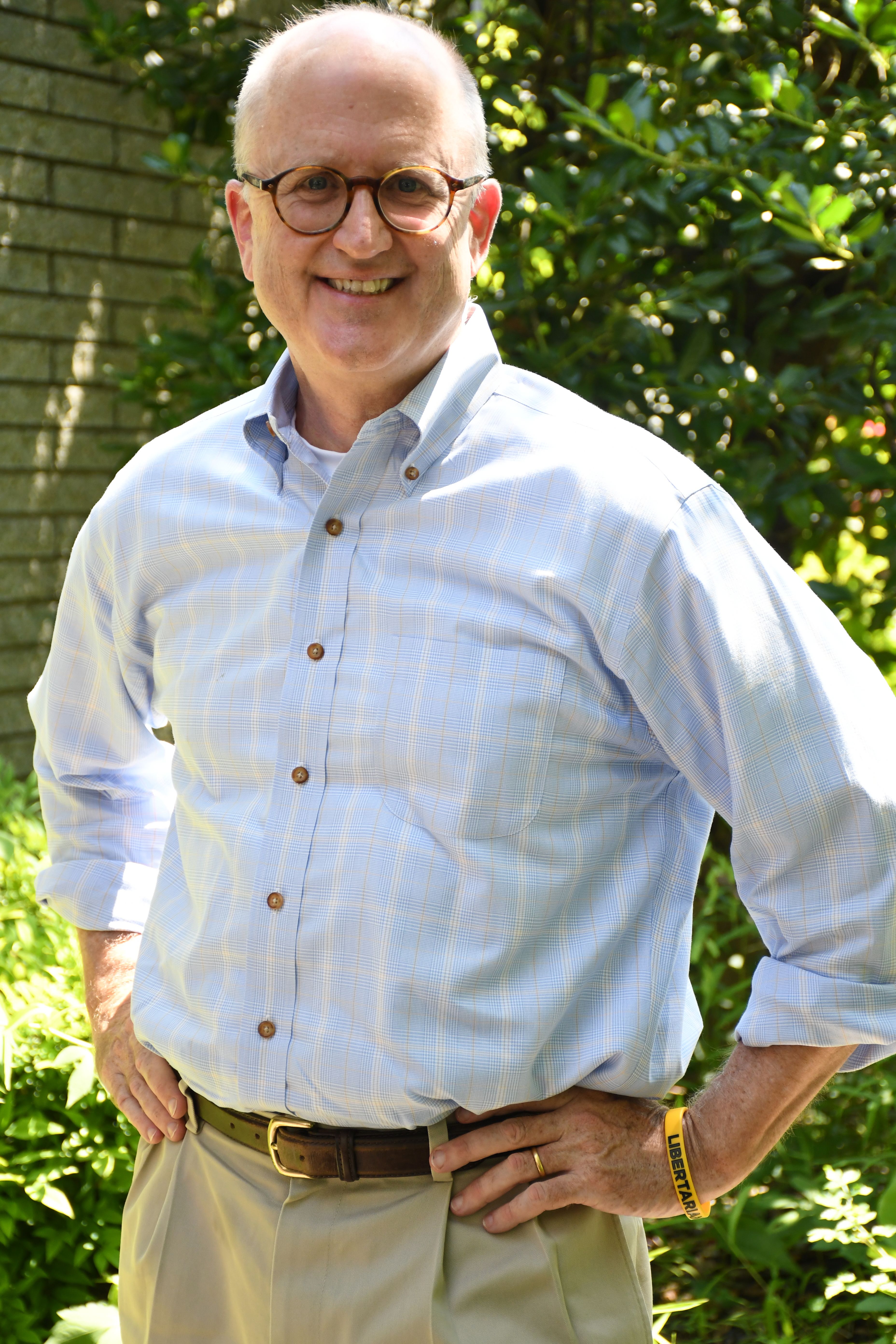
David Lashar. (Pamela Wood/The Baltimore Banner)
David Lashar. (Pamela Wood/The Baltimore Banner)
 Built with Shorthand